Advance vs Last-Minute Booking for Backpacking Accommodation
Book backpacking accommodation earlier when dates are fixed, demand is high, or acceptable options are limited; book closer to arrival when plans are flexible and several suitable stays remain. There is no universal lead time, and waiting until the last minute is not a reliable way to get a lower price.
Choose your booking direction
Use the conditions that apply to this stop. The decision is about the direction of timing, not a universal number of days or weeks.
Lean earlier
Book sooner when losing suitable accommodation would be difficult to absorb.
Demand is high because of the season, a busy weekend, a holiday, or a major event.
Arrival dates or important stops are fixed.
Acceptable accommodation supply is limited relative to demand.
A particular location, property, or room type matters and substitutes are limited.
More room to wait
Booking closer to arrival can be workable while alternatives remain easy to use.
Dates or stops can move without disrupting the trip.
Demand is manageable for the actual destination and dates.
Several acceptable stays remain available.
You are willing to change property, room type, location, or timing if needed.
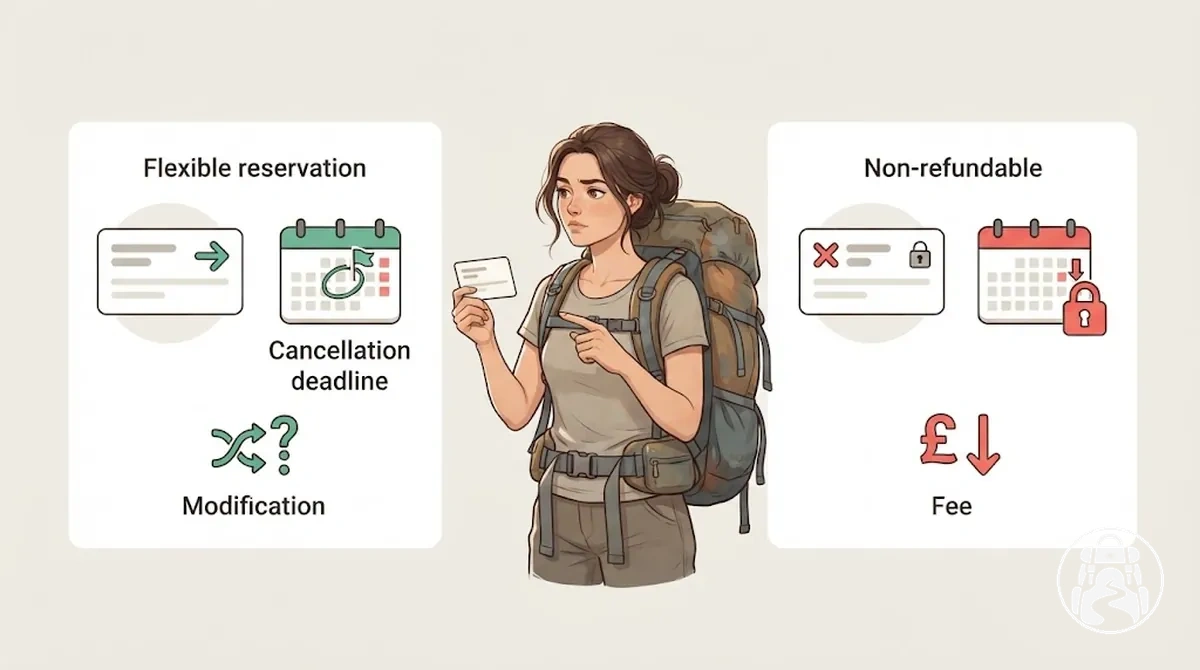
Reservation terms modify the trade-off: flexible cancellation or modification terms can reduce the downside of booking early; restrictive or non-refundable terms increase the cost of changing plans.
Recheck trigger: if acceptable options start to narrow or your itinerary becomes less flexible, move the booking decision earlier. Waiting preserves flexibility, but it does not guarantee availability or a lower price.
Think of booking timing as a balance between certainty and flexibility. The more disruptive it would be to lose a suitable stay, the stronger the case for committing earlier.
Table of Contents⌄
The Trade-Off Between Booking Certainty and Travel Flexibility
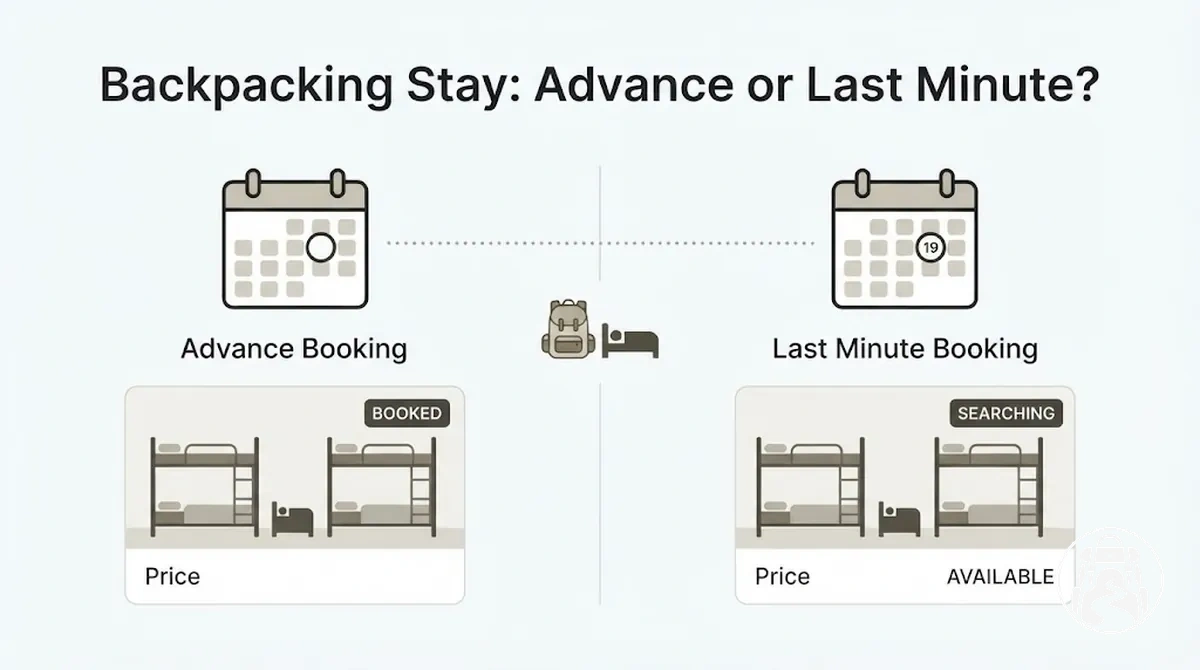
Advance booking and last-minute booking trade certainty against flexibility across the same accommodation decision.
Advance booking prioritizes certainty by securing a preferred accommodation option earlier, while last-minute booking preserves more spontaneity because commitment happens closer to arrival.
Advance booking generally increases certainty earlier, while last-minute booking preserves more pre-commitment flexibility and accepts greater exposure to changing availability.
Decision dimension
Advance booking
Last-minute booking
Certainty
Secures an accommodation choice earlier, reducing dependence on what remains available close to arrival.
Leaves the accommodation choice unresolved longer, so certainty depends more on remaining availability.
Flexibility
Creates earlier commitment, although flexible cancellation or change conditions can reduce change risk.
Preserves more room to change plans before committing to accommodation.
Exposure to availability loss
Reduces exposure to losing a preferred accommodation option before it is reserved.
Accepts greater exposure to preferred options becoming unavailable while preserving later choice.
Which side of the trade-off matters more changes with trip conditions: fixed plans and a strong preference for particular accommodation increase the value of certainty, while adaptable plans and willingness to accept alternatives increase the value of flexibility.
Cancellation conditions can reduce the change risk of booking ahead, whereas waiting shifts more availability risk toward arrival.
Both advance booking and last-minute booking can therefore be suitable under different conditions.
What Determines the Best Time to Book Backpacking Accommodation
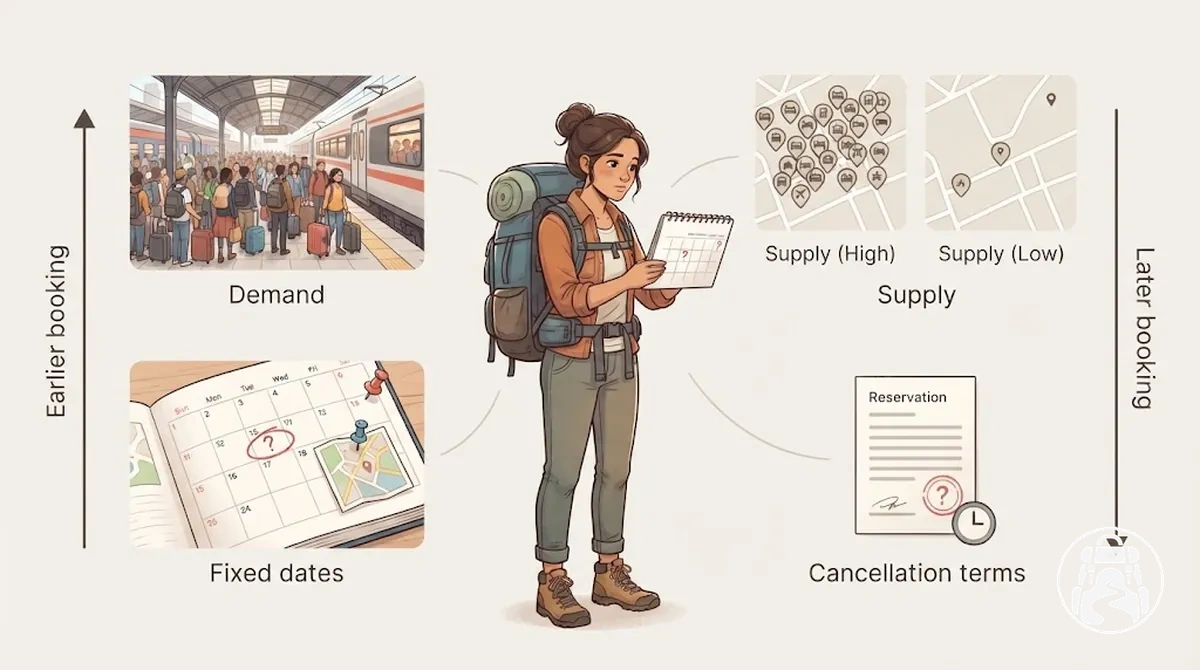
The best time to book backpacking accommodation depends on several interacting conditions rather than one universal lead time.
Demand, fixed dates, accommodation supply, cancellation terms, and your tolerance for losing preferred options determine whether booking timing should move earlier or can remain more flexible.
Evaluate each criterion by linking its current condition to the consequence of waiting.
Conditions that increase availability risk strengthen the case for booking earlier, while conditions that preserve acceptable alternatives allow later booking to remain more workable.
No single criterion determines reservation timing by itself because the practical effect depends on how the conditions combine.
Five decision criteria
Demand: Busy seasons, weekends, holidays, or major events can increase competition for accommodation and reduce remaining availability, which pushes booking timing earlier; ordinary-demand dates can allow more room to wait.
Fixed dates: Fixed arrival dates or non-negotiable stops leave fewer alternatives if preferred accommodation becomes unavailable, strengthening the case for earlier booking; movable dates or optional stops allow greater tolerance for later booking.
Accommodation supply: Limited acceptable accommodation supply increases the consequence of waiting because fewer suitable alternatives may remain, while broader acceptable supply can make later booking more workable when demand does not absorb it.
Cancellation terms: Flexible cancellation terms can reduce the commitment cost of booking earlier because plans may still be changed within the reservation conditions; restrictive or non-refundable terms increase the downside of committing before plans are settled.
Tolerance for losing preferred options: A strong preference for a particular location, room type, or suitable property increases the value of securing it earlier, while willingness to accept alternative accommodation makes later booking easier to tolerate.
Several higher-risk conditions can occur together: high demand combined with fixed dates and limited accommodation supply creates more availability risk than any one condition considered alone.
Conversely, flexible dates, broader acceptable supply, and willingness to use alternatives can support a later decision.
These criteria should therefore be used to evaluate booking timing for the actual trip conditions rather than to prescribe one fixed booking window.
Seasonal and Weekend Demand
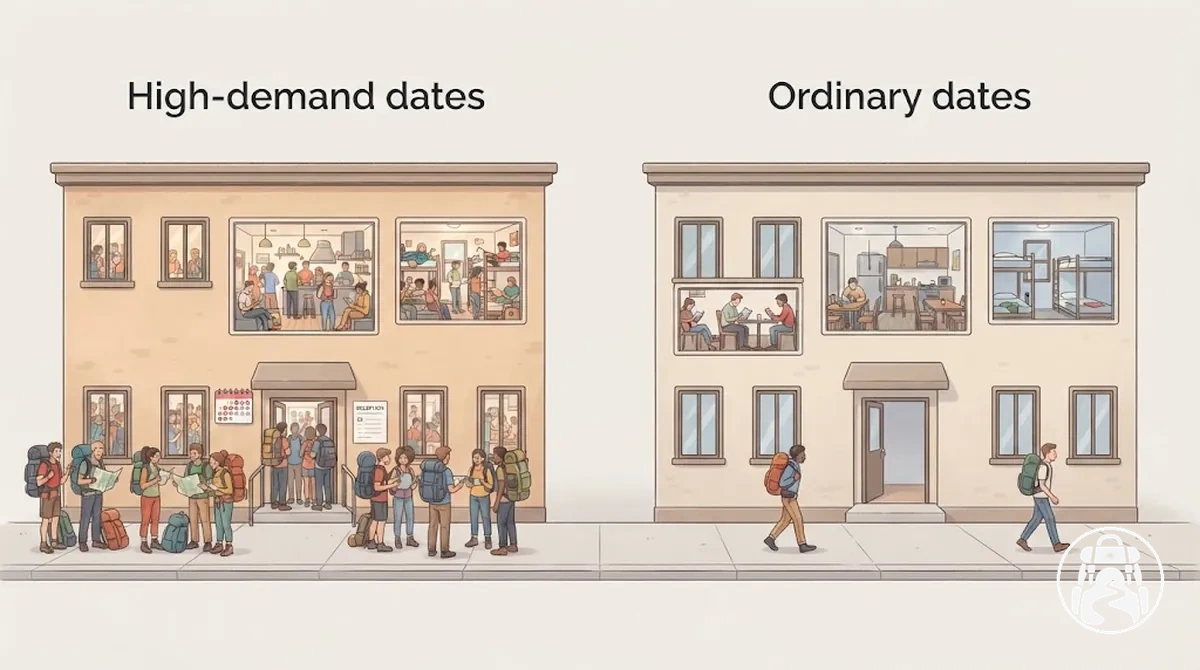
Higher expected accommodation demand can increase the value of booking earlier because more travellers may be competing for the same available beds.
High season, busy weekends, holidays, and major events can therefore reduce remaining availability as the stay date approaches.
The effect depends on the specific destination and dates rather than creating a fixed booking deadline.
High-demand dates can create more booking pressure than ordinary dates at the same destination, while lower-demand periods may leave more accommodation available closer to arrival.
Ordinary dates still do not guarantee last-minute availability because actual supply and demand can change.
Demand therefore shifts booking timing toward earlier commitment when availability pressure is greater, without establishing a universal lead time.
How Fixed Your Travel Dates and Route Are
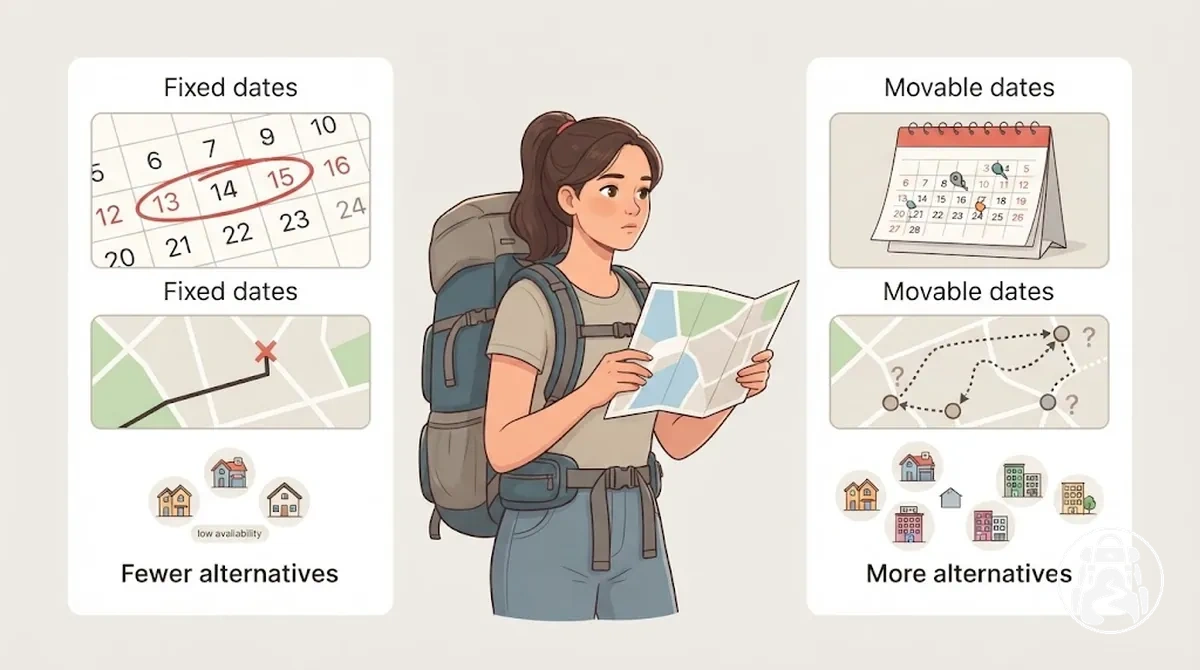
Fixed dates or stops
Fewer alternatives remain if suitable accommodation disappears, so the value of booking earlier increases. The effect is strongest when fixed plans coincide with high demand or limited supply.
Movable dates or optional stops
Alternative dates or stops can absorb lost availability, so later booking can be more workable. Flexibility lowers the constraint; it does not guarantee accommodation will remain available.
This distinction is about how itinerary fixedness changes accommodation-booking risk, not about how the wider route should be designed.
Accommodation Supply at Popular Stops
Broader accommodation supply generally leaves more acceptable options available if you wait, while constrained supply increases late-booking risk because fewer alternatives can absorb changing availability.
At a popular stop with several suitable stays, losing one option may still leave other workable choices.
When capacity is limited, losing acceptable options can make remaining availability more restrictive and strengthen the case for booking earlier.
Accommodation supply should be judged relative to demand rather than destination size alone, because strong demand can absorb substantial capacity and reduce remaining options.
A large destination can therefore still carry late-booking risk, while a stop with broader acceptable supply relative to demand can allow greater tolerance for waiting.
The booking implication is to move earlier when suitable alternatives are constrained and to allow more flexibility when acceptable supply remains broad.
Cancellation and Change Terms
Booking terms change the cost of committing early because they determine how easily a reservation can be cancelled or modified if the trip changes.
What the terms mean for timing
Flexible cancellation or modification
Can reduce the downside of booking earlier because changes may remain possible within the stated conditions.
Restrictive or non-refundable terms
Create a stronger commitment because cancelling or changing the stay may be limited, unavailable, or subject to a cost.
Before committing
Check the cancellation deadline, modification rules, fees, and property-specific conditions. Flexible terms reduce change risk; they do not make an early booking risk-free.
How Far Ahead to Book Backpacking Accommodation Under Different Conditions
There is no universal answer to how far ahead you should book backpacking accommodation.
Booking lead time should change with demand, fixed dates, accommodation supply, and reservation conditions, so the appropriate booking window is a direction rather than one fixed number.
Use the four checks below to move the booking decision earlier or later according to the conditions of the stay.
High-risk conditions strengthen the case for earlier booking, while lower-risk conditions can support a shorter horizon.
When several risks occur together, such as high demand, fixed dates, and constrained supply, waiting leaves fewer ways to absorb lost availability.
Flexible dates, broader supply, and change-friendly reservation terms can support more flexibility, but they do not guarantee that suitable accommodation will remain available.
Four checks before choosing a booking horizon
Check demand: If the stay falls on high-demand dates, move the booking lead time earlier; if demand is ordinary, a shorter horizon may remain workable if the remaining checks also indicate lower risk.
Check fixedness: If dates or important stops are fixed, treat the booking risk as higher and favour earlier booking; if dates or stops can move, a shorter horizon may remain workable.
Check supply: If acceptable accommodation supply is constrained relative to demand, move earlier; if several suitable alternatives remain, a shorter booking horizon may carry less availability risk.
Check reservation conditions: If flexible cancellation or modification terms reduce the downside of early commitment, booking earlier may preserve more options; if terms are restrictive, balance that commitment against current availability risk and recheck conditions before delaying.
Recheck the decision as demand, remaining supply, fixed dates, or reservation conditions change.
A lower-risk situation can become more restrictive as the trip develops, while increased flexibility can sometimes support a shorter booking horizon.
The practical rule is to assess the conditions, choose a timing direction, and recheck rather than relying on one fixed number.
Book Earlier When Demand Is High or Dates Are Fixed
Booking earlier becomes more sensible as the consequence of losing suitable accommodation rises.
High demand, fixed dates, limited supply, major events, or a strong preference for a particular location or room type can all increase that consequence, but none creates one universal lead time.
High demand: When many travellers are competing for accommodation, waiting can reduce the number of suitable options that remain, increasing the value of booking earlier.
Major events: When an event concentrates demand on specific dates, remaining accommodation can become more constrained, strengthening the case for earlier booking.
Fixed dates: When arrival dates cannot move, losing a suitable stay leaves fewer alternatives, so earlier commitment can reduce booking risk.
Limited supply: When only a small range of acceptable accommodation is available, waiting can narrow the remaining choices further, making earlier booking more useful.
Preferred location or room type: When a particular location or room type matters strongly, fewer acceptable substitutes remain if that option becomes unavailable, increasing the value of booking earlier without making it a necessity.
Several of these conditions occurring together strengthen the case for moving the booking decision earlier, while weaker or isolated risks allow more flexibility.
The timing should remain proportional to actual demand, supply, fixedness, and the consequence of losing preferred accommodation rather than follow one fixed booking interval.
Book Closer to Arrival When Plans Are Flexible and Availability Is Strong
Check How Early Hostels Open Reservations
Unavailable far ahead does not always mean sold out
A property may release inventory only within its own reservation window, so a distant unavailable date can have more than one meaning.
Status unclear: verify the property's current booking window before interpreting the date.
Reservations not open yet: recheck when the booking window approaches rather than treating the stay as unavailable.
Confirmed sold out: consider acceptable alternatives and take earlier action for other accommodation.
Do not generalise one hostel's reservation-opening pattern to other properties.
Risks of Booking Too Early or Too Late
Booking too early can create reduced flexibility and cancellation exposure if plans change after an early commitment, while booking too late can increase the chance of constrained availability or losing preferred options.
Price uncertainty can affect either timing choice because future rates and remaining supply are not known in advance.
The main risks differ by timing: booking too early concentrates commitment and change risk, while booking too late concentrates availability and choice risk.
Risk category
Booking too early
Booking too late
Reduced flexibility
Early commitment can make later plan changes harder when booking terms restrict modifications.
Waiting preserves flexibility before commitment, but fewer suitable alternatives may remain when the booking is finally made.
Cancellation exposure
Changing plans can create a cancellation cost or restriction when the reservation terms are inflexible.
Booking closer to arrival can reduce exposure to earlier itinerary changes, although the remaining reservation terms still apply.
Preferred options
Booking earlier can protect access to a preferred location or room type, but that preference may become unnecessary if plans change.
Waiting can mean a preferred location, property, or room type is no longer among the available choices.
Availability
Earlier booking reduces dependence on remaining availability closer to arrival, but it creates commitment sooner.
Late reservation can face constrained availability when demand has absorbed a larger share of acceptable supply.
Price uncertainty
Committing early means later price movements are unknown, so a different rate may appear before arrival.
Waiting means accepting the prices attached to the options still available closer to arrival, which may be higher or lower.
The severity of these risks varies by destination, date, demand, remaining supply, and booking terms.
Early and late booking therefore create different trade-offs rather than universal outcomes: booking timing should reflect which consequence matters more under the actual trip conditions.
Waiting Too Long Can Reduce Availability and Choice
When demand absorbs acceptable supply
1. Remaining availability narrowsFewer suitable stays may remain for the required dates.
2. Acceptable choices shrinkA preferred location, room type, quality level, or convenience may no longer be available.
3. Other parts of the stay may need to changeThe traveller may need to accept a different option or adjust another preference.
This is a conditional risk, not an inevitable outcome. Its severity depends on demand relative to the supply that still meets the traveller's needs.
Booking Too Early Can Limit Changes to Your Plans
Key distinction: timing is not the whole problem
Early booking can reduce room to change plans when it creates a restrictive commitment before the trip is settled. A later change of route, date, or length of stay may then trigger a cancellation cost, modification restriction, or loss of the booking value.
Restrictive terms
Increase the cost or difficulty of changing the trip after an early reservation.
Flexible terms
Can keep an advance booking changeable within the property's stated cancellation and modification conditions.
Price Uncertainty With Last-Minute Booking
Price risk is different from availability risk
Price uncertainty
Waiting does not make accommodation predictably cheaper. A later rate may be higher, lower, or similar, so the budgeting implication is uncertainty rather than a dependable saving.
Availability risk
The question is whether a suitable stay remains available at all as demand changes relative to remaining supply.
They can move separately
A room can remain available while its price or booking conditions change. Stronger demand can make remaining rates or terms less favourable, but that outcome is not guaranteed.
How to Combine Advance and Last-Minute Booking on One Trip
A hybrid booking method means committing earlier to high-risk stays while preserving flexibility at lower-risk stays.
Book ahead where fixed dates, stronger demand, or limited acceptable accommodation make failure more consequential, and book later where plans are flexible and suitable alternatives remain.
Booking timing can therefore differ from one stop to another without following a fixed percentage or universal formula.
Hybrid booking sequence
Classify each stop by booking risk: Identify which stays carry greater consequences if suitable accommodation becomes unavailable and which lower-risk stays retain more flexibility or alternatives.
Secure high-risk stays: Book ahead for stops where fixed dates, stronger demand, or constrained acceptable supply make losing the preferred accommodation more disruptive.
Monitor lower-risk stays: Keep lower-risk stays open when flexibility and remaining supply support later commitment, and monitor availability as the trip approaches.
Re-evaluate and commit: As plans firm up, re-evaluate demand, remaining options, and itinerary certainty, then book later stays when the cost of continued uncertainty becomes less acceptable.
Book High-Risk Stays First
A high-risk stay is one where losing a suitable accommodation option would cause meaningful disruption because the trip has fixed dates, high demand, limited supply, or another strategically important constraint.
Its booking priority comes from the consequence of losing workable alternatives, not simply from the fame of the destination.
Prioritize an earlier reservation when the actual conditions make that consequence significant.
Fixed dates: When arrival or departure dates cannot move, losing suitable accommodation leaves fewer ways to absorb the disruption, so treat the stay as a higher booking priority.
High demand: When demand is strong for the relevant dates, acceptable availability can narrow more quickly, increasing the value of securing the high-risk stay earlier.
Limited supply: When few suitable properties, room types, or locations meet the trip's needs, losing one option can materially reduce the remaining alternatives, supporting an earlier reservation.
Strategic importance: When a stay is important to keeping the trip workable, losing it can create disproportionate disruption even if the destination itself is not unusually popular. Give it higher booking priority only after checking the actual demand, supply, and constraints for those dates.
Leave Lower-Risk Stays Open Until Plans Firm Up
A lower-risk stay can remain open longer when movable dates, several acceptable properties, manageable demand, and a willingness to adapt preserve workable alternatives.
Under those conditions, delaying commitment can retain flexibility while the traveller learns more about the route and timing.
Later commitment remains conditional on those lower-risk conditions continuing rather than on an assumption that accommodation will stay available.